


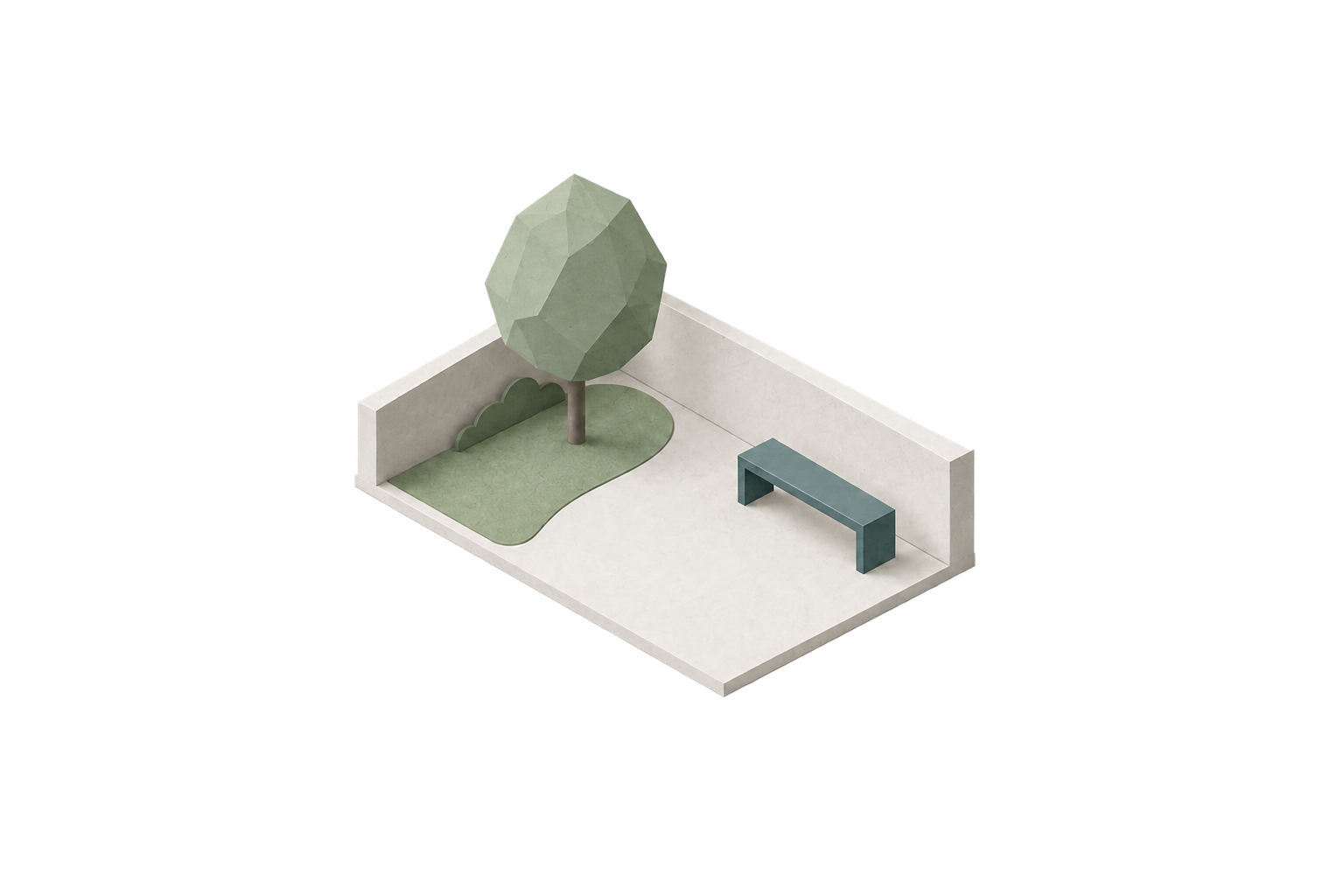
Pocket park / vacant-lot greening (landscape)
How can a small urban site offer an accessible, cared-for place to pause?
Setting-matched research1 linked source · 1 peer-reviewedPeople & purpose
Nearby residents and passers-by
Design question: How can a small urban site offer an accessible, cared-for place to pause?
What the evidence supports
Existing cluster-randomized greening evidence; bundled maintenance and landscape intervention.
Greening trial; programme details require testing.
The label describes research relevance, not study quality or a proven whole-building benefit.
Design variables to investigate
Proposed moves to develop and test for this programme.
- Visible public entrances
- Green cover
- Seating and shade
- Maintenance legibility
Check the trade-offs
Architectural checks, not additional findings from the cited papers.
- Balance restorative contact with shade, accessibility, maintenance and perceived safety.
- Water, planting and varied terrain need appropriate hygiene, supervision and safe accessible routes.
Evaluate with the intended users
- Observed use and dwell patterns
- Resident-rated comfort and welcome
Choose a feasible outcome and comparison before testing. Record who used the space, occupancy, care or service changes, and environmental exposure; these can change the result.
Develop the design question
Related Atlas variables provide additional context. They do not verify this complete programme.
Peer-reviewed sources & research audit1 source
Read study design, population and transfer limits together. A source reused for several building functions is still one study.
South et al. (2018) — Effect of Greening Vacant Land on Mental Health of Community-Dwelling Adults: A Cluster Randomized Trial (2018) ↗
Peer-reviewed research · Relevant full-paper sections checked
Reported finding or research scope: Philadelphia cluster-randomised vacant-lot greening trial found reductions in reported feelings of depression and worthlessness; the overall poor-mental-health measure was not statistically significant. Supports testing maintained small green spaces and nearby residents’ experience.
Limits and contrary findings: Bundled cleanup, planting, fencing and maintenance intervention. Does not isolate individual design ingredients or establish clinical treatment; no automatic transfer to memorials or gardens.
Research audit: Body confirms the bundled cluster randomized greening intervention and symptom-specific self-report outcomes. Overall poor mental health did not meet the conventional significance threshold; diagnosis and long-term persistence were not established.
Record checked 2026-10-10