


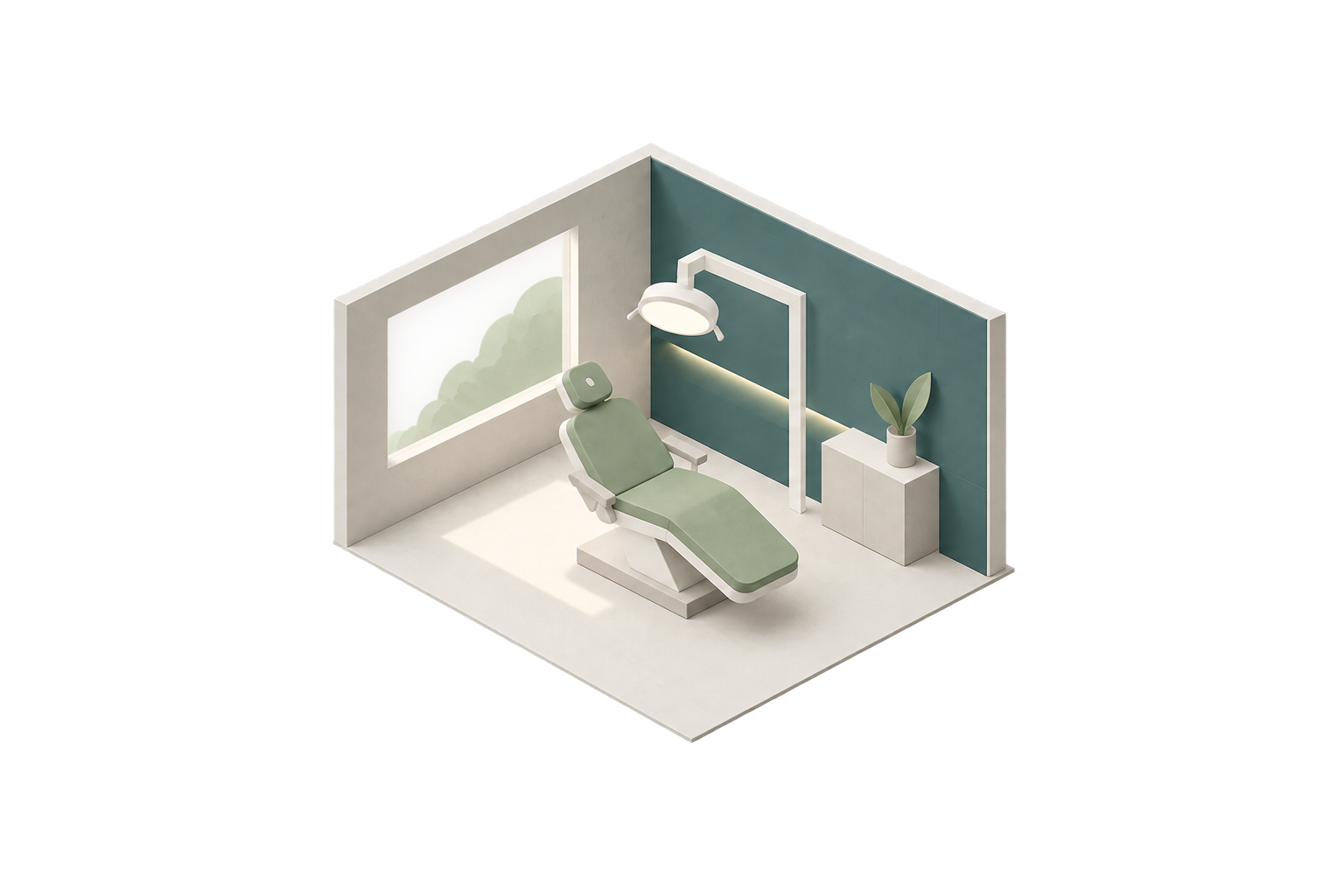
Sensory-adapted dental clinic
How can a dental operatory offer a tolerable sensory experience while preserving clinical access, communication and each child’s choice?
Setting-matched research1 linked source · 1 peer-reviewedPeople & purpose
Autistic children receiving routine dental cleaning, caregivers and dental teams
Design question: How can a dental operatory offer a tolerable sensory experience while preserving clinical access, communication and each child’s choice?
What the evidence supports
Research examined the same care setting and population, but only a bundled sensory adaptation during routine cleaning. Design moves remain proposals; clinical suitability and individual preferences come first.
A randomized crossover trial studied a combined visual, auditory and tactile adaptation during routine cleaning in autistic children. It does not isolate a room feature or establish effects in all dental patients.
The label describes research relevance, not study quality or a proven whole-building benefit.
Design variables to investigate
Proposed moves to develop and test for this programme.
- Adjustable ambient light with a clinically adequate examination light
- Optional audiovisual content chosen with the child and caregiver
- Low-noise arrival and waiting with clear preparation cues
- Optional deep-pressure support only within an appropriate clinical protocol
- A simple route to pause, stop or leave the procedure
Check the trade-offs
Architectural checks, not additional findings from the cited papers.
- Do not dim the examination task below clinical requirements; adapt ambient exposure separately.
- Deep-pressure aids need clinical assessment, consent and safe release; they are not general architectural specifications.
- Offer choices and opt-out routes. Sensory preferences and communication needs differ between children.
Evaluate with the intended users
- Observed distress during a defined cleaning procedure
- Skin-conductance level, with a suitable research protocol
- Child-reported pain and sensory discomfort, when accessible
- Caregiver and clinician feedback on tolerability and workflow
Choose a feasible outcome and comparison before testing. Record who used the space, occupancy, care or service changes, and environmental exposure; these can change the result.
Develop the design question
Related Atlas variables provide additional context. They do not verify this complete programme.
Peer-reviewed sources & research audit1 source
Read study design, population and transfer limits together. A source reused for several building functions is still one study. Some newer sources have only selected sections or abstracts checked; the individual audit records show what remains unresolved.
Sensory Adaptations to Improve Physiological and Behavioral Distress During Dental Visits in Autistic Children: A Randomized Crossover Trial (2023) ↗
Peer-reviewed research · Indexed article sections checked
Method: Randomized crossover clinical trial
Population / setting: Autistic children aged 6–12; 162 first cleanings and 138 second cleanings analysed
Reported finding or research scope: Sensory-adapted care lowered skin-conductance level and some video-coded distress measures.
Limits and contrary findings: Not every outcome improved: nonspecific conductance responses, global behaviour ratings, pain and sensory-discomfort reports were not significantly different. Bundled intervention; clinic and population-specific.
Research audit: Full article indexed methods/results/limitations inspected
Verification limits: Key findings and limitations were checked in the materials listed here. Exact effect estimates and supplementary analyses still require verification against the full tables and supplements.
This is a selected-source extraction, not a complete audit of every table and supplement. It does not establish numerical design thresholds or a whole-building benefit.
Record checked 2026-10-11